Pages

Sunday, 2 October 2011

Monthly Yu-Gi-Oh! Tournament - September


Though this event was eagerly anticipated by those with whom I most frequently test, disappointment was to be had. Following the staggering turnout of 20+ players that has since become a regular occurrence, a large turnout was certainly expected for an event offering chase cards such as Steelswarm Roach as prizes. However, a mere 11 players turned up to compete on the day. Whether it was the cost, prizes, time or the expected difficult competition that put people off, this was a major blow for the competitive scene in Liverpool. Following my success in the weekly event, I continued to wield a tweaked version of Agents to a relatively successful finish.
Round 1 - Dragons - 2-1
I essentially hand my first game of the day over to my opponent with a single utterance of “ok” in response to his activation of Red-Eyes Darkness Metal Dragon’s revival effect. Clearly unfocused, I allowed this activation despite having Herald of Orange Light in hand with another Fairy to discard. I calm myself swiftly, and attempt to bring my mind under control as I sideboard. Game 2 starts with his summoning of a Koa’ki Meiru Drago, which paralyses my mind with fear that my ridiculous errors would leave me with a loss in the first round. Thankfully his summoning was merely for tempo, as he proved to have no access to dragons and only sought to set up the dragon for reanimation later. I leapt on the opportunity, and won that game and the one that followed.
Round 2 - Lightsworn - 2-0
Paired against my round 4 opponent from Wednesday, I knew a good match would follow. His practice was evident in skillful plays throughout, but despite that and the powerful tweaks that had been made since the previous match I felt far more confident with the matchup than expected. Thrown into focus by fear in the first round, I continue to push for the win.
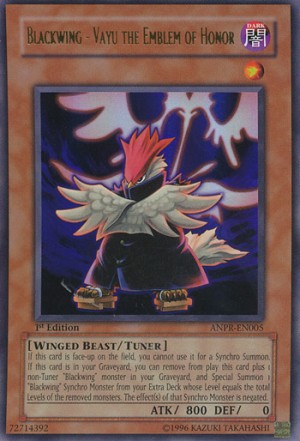
Round 3 - Blackwings 0-2
As one of the more unique decks seeing play at the event, I wasn’t quite prepared to face down the winged menace. Though I played carefully around the various traditional pieces of the puzzle, the inclusion of Ryko to feed Black Luster Soldier was a devastating surprise. Both games ran long, with him dutifully pushing through my misplays to seize the win.
Round 4 - Macro Cosmos 2-0
Yet again I’m paired against an opponent from Wednesday night, and yet again the deck and player have greatly improved. Having pushed consistently to improve upon my play since my initial misstep at the start of the day, I’m very much in the zone as I fight past the grave hate and seize every opportunity presented to efficiently win.
Quarter Final - Gladiator Beasts - 2-0
Following a lengthy break the quarter finals begin, and I am dreading it. Having built momentum throughout the constant play of the last three rounds, I could feel myself lacking in focus as the match began. With little experience against Gladiators I was incredibly wary of the use of my counters. Extensive experience in using counterspells in Magic allowed me to gauge the right timing for my limited responses, and I managed to push for the win in both games.
Semi Final - Blackwings - 0-2
I fall to the naive mindset of hoping to face Lightsworn in the semis, and so it was inevitable really that I face Blackwings yet again! The match plays out quite similarly to the previous one, though in this case with the added difficulty factor of drawing numerous copies of Mystical Shine Ball. Once my Gachi Gachi Gantetsu’s fall, the match up is lost yet again.
Conclusion - 3/4th
I’m relatively happy with my result, especially considering my lack of time for preparation. The turnout was very disappointing, but the concentration of solid players with strong decks made it worthwhile. With another Agent deck falling to Blackwings in the finals, to very much the same horrendous draws as I saw in my semi final match, I felt at least confident that I am finally on track to developing my skills ready for the next wave of competitive events.

Wednesday Night Yu-Gi-Oh! 14.09.11


This week I turned to the dark side. Or perhaps that should be the light side, as I set aside Reborn Tengu and Debris Dragon to seize the raw power of Agents. I’d been working on the deck for some time, and having finally got a hold of the Heralds of Orange Light I felt it was time to test the deck before the weekend’s big local tournament. With a turnout of 20+ players, five rounds make for a challenging trial run!
Round 1 - Lightsworn - 1-1-1

The first game swung back and forth, but I seized the win through relatively solid play, bolstering my confidence in the deck and myself. That confidence was torn apart in the following game when I horribly misplay my use of Honest in response to Honest. Instead of thinking and running through the required timing steps, I eagerly just drop Honest onto the table. As a result, my Kristya still dies, jumps to the top of my deck and locks me out of responses next turn. Epic fail isn’t even a strong enough description. The match results in a draw, which surprises me as it is the first time I’ve seen a draw enforced in Yu-Gi-Oh!, and it leaves me fairly disheartened. The one thing I am determined to do tonight as a result, is play the game better!

Round 2 - Macro Burn - 2-0
An obvious pairing with a player with a single loss leads to a very unexpected deck. The use of Macro Cosmos and similar banishing effects slows my deck to a crawl, but building up a critical mass in order to sweep and explode, seizing control of the board in one fell swoop seems to be my route to victory.
Round 3 - Macro Cosmos - 2-0
Defeating an opponent maindecking graveyard hate left me a little bit more confident in my ability to play the game well when focused. What I didn’t expect was yet another banishing deck! Patience yet again led to answers, allowing me to grind my way through each game, and thankfully getting some unexpected use of Leviair in returning his Cyber Valley to give me the advantage to turn the game around. Caius proves to be a spectacular answer to Kristya right now, but thankfully the brutal speed at which Master Hyperion allows you to react makes Monarchy little more than a speed bump.
Round 4 - Lightsworn 2-1
Though seemingly a match with plays carried out at blinding speed, the sheer force of will behind each set of actions resulted in the lead being passed back and forth as fast as priority was passed between players! The true highlight of the match was when Mist Wurm was selected as a preferable target to Trishula, utterly destroying my field presence in a way the dragon never could. In time I managed to push through for enough damage to win on life points, and though doing so always makes me feel a step away from an actual win, it does leave me feeling far more confident and comfortable with my deck.
Round 5 - Agents - 2-1
As the first time playing both the mirror match and one of the most skilled players in the local group, nervous doesn’t quite describe my state of mind when I shuffled up. With an unshakable grin masking my fear, and my focus bouncing around the room in the least useful manner, the match begins. My opponent handily seizes first blood when I gamble in negating his Venus’ summoning with Solemn Judgment, only to be beaten down when he casts Monster Reborn. This punishing play serves as a wake up call to the competitive player deep within. Gears start to turn, my focus narrows and the desire to win rises to the surface. I play carefully throughout both of the following games, making misplays but adapting and learning from my mistakes swiftly. Careful calculation and fortunate draws allow me to win the following games, surpassing my own expectations for sure.
Conclusion - 4-0-1, 1st
This night I felt as though I had truly earned my victory, Having played against several strong players and a mixed field of top tier decks and anti-meta hate, I eagerly look forward to the competition to follow on the weekend. 

Wednesday Night Yu-Gi-Oh! 07.09.11


This will be a relatively brief recap of the event, but I was thoroughly thrilled to be able to give my Tour Guides a shot in Plants, despite the rules change.

Round 1 - Bye!
Round 2 - Fabled - 2-1
Fabled decks always prove to be quite stressful for me to face, as a strong first turn off the die roll is often unbeatable. Thankfully I manage to grind my way through to victory, simply through being patient and not letting my focus waver.
Round 3 - Psychics 2-0
A difficult match in which the opponent was always little more than a turn away from victory, but explosive synchro abuse remains as powerful as ever.
Round 4 - Agents 0-2
This is a matchup that I have no real idea on how to approach. Plants is a solid control deck in having access to a variety of Synchro and Xyz monsters for all sorts of situations...but once Kristya lands, there’s little I can do to turn the tide.
Conclusion - 3-1, 1st
Through colossal luck with tiebreakers, I managed to win the event, though I certainly don’t feel it was deserved. Though I feel I played solid games against my round 2 and 3 opponents, the bye feels unbelievably cheap and the total destruction by Agents in the final round makes me feel far less a winner than one should feel in this position.
Plants were quite an enjoyable deck to play, but my list was far from refined. Despite what many will say, the deck is far from dead, but as a player I need further practice and need to learn how to handle the latest powerhouse deck in the format, Agents.

A Return to Form!


It’s certainly been a while since I last posted, and it’s about time that changed! With the start of a new term at work as well as personal emergencies, working on any serious posts simply couldn’t happen. As things are now slowly settling, I intend to push through a wave of posts. Here are the highlights I’m working on for the near future:
Magic the Gathering
Innistrad Reviews - I will be working through a review of the set for Standard, Modern, Legacy over the coming weeks, focusing on actual testing and results. A limited review will follow if and when time allows!
Deck Features - I will be carrying out new deck features, both of my own and those that break out at large events, with a focus on the design, function and potential of the decks. Expect the format focus to shift towards the most important formats with each qualifier season.
Yu-Gi-Oh!
Reviews - With a strong wave of releases between September and December, I will carry out reviews of multiple new releases at once. Konami plan their releases in such a way that this is the best means of gaining a full view of the evolving game.
Deck Features - As with Magic, I will be carrying out new deck features, both of my own and those that break out at large events, with a focus on the design, function and potential of the decks. The first such feature will be on the Agent deck that has led me to great success most recently!
Poke’mon - yes, I will finally be featuring articles on the game!
Format Analysis - An overview of the evolution of the HeartGold&SoulSilver onwards format, particularly focused on the impact of the Black&White sets thus far.
Deck Features - As with the other games, I will be carrying out new deck features, both of my own and those that break out at large events, with a focus on the design, function and potential of the decks. These features will come slowly as I (hopefully!) gain experience in the game over time.

Wednesday, 24 August 2011

Yu-Gi-Oh! 09.11 Ban List Analysis


With the new Limited and Forbidden list finally confirmed for the Autumn-Winter season, it is finally time to start analysing the new format. What strategies have been damaged the most by the list, and could we see the revival of forgotten strategies as a result? And just how different will this format be to the last? Let’s find out!
The September Impact!
In forming an opinion on the new format, it is important to first take into account the “Power Card” availability that the list leaves us with. Power Cards can be anything from something widely considered a staple, to threats and solutions that were previously unavailable. So let us begin by taking a look at five of the most impacting factors leading into the new format.

1. The Perfect Storm

Once Heavy Storm found its way onto the Forbidden list, players across the globe were ecstatic. And I won’t lie, I was one of them! Players could finally play the controlling Traps and theme-empowering Field Spells they’d always wanted to, and surely the potential for crazy combinations and One Turn Kills were impossible! 
It turns out that a single back row sweeper is enough for combo players to work with, especially when that sweeper is Giant Trunade. The fact the format shifted towards the use of such controlling traps as Solemn Warning and Royal Oppression resulted in Giant Trunade being doubly advantageous. Should it resolve, the player can generally pull off any major play they need to with minimal fear, needing only to play carefully to avoid Effect Veiler when possible, and then follow up by resetting their defenses to force the opponent into having one real out. And that, of course, would be their own Giant Trunade...
With Giant Trunade leaving the format, Heavy Storm makes its triumphant return. As ever, the presence of Heavy Storm will result in far more calculated, careful use of the spell and trap zones, whilst bringing Stardust Dragon back to higher levels of play. Much hype has been given to the supposedly inevitable maindecking of Starlight Road thanks to the staple status of Dark Hole and Heavy Storm.The problem with this is Mystical Space Typhoon, and its long awaited (or feared?) return to 3 copies per deck. This change alone makes the playability of Starlight Road fall dramatically, but will yet again drive up the presence of Stardust Dragon. The return of Heavy Storm brings the game back to a state in which reckless and mindless play are punished severely, but only time will tell whether or not the unlimiting of Mystical Space Typhoon will prevent the formation of a skillful format.

2. A Legend Stands Alone
When Lightsworn and Blackwings tore apart their respective formats, Konami took every necessary step to eradicate the problem with the following Limited and Forbidden list, and often going too far just to ensure the problem is dealt with. The release of Storm of Ragnarok revived the Six Samurai theme with superior Legendary versions, whilst bringing the theme up to date by introducing a powerful Synchro “Boss Monster” to work with. 
Legendary Six Samurai - Shi En swiftly became a powerhouse in the format, and Konami’s precautionary response in March was to restrict Gateway of the Six. One format later, and the restriction has proven fairly meaningless to decks seeking to swarm and lock up the game as fast as possible. As a result, Konami made the decision to restrict both Legendary Six Samurai - Shi En and the theme-specific tutor Shien’s Smoke Signal. I believe that this decision was the best that Konami could possibly make, as for once they’re actually tackling the problem cards without butchering the theme entirely. 

3. Freedom from Oppression
Of all the Traps in recent years to produce one-sided games, Royal Oppression is the worst offender. Similar in many ways to the sheer power once displayed by Imperial Order, Royal Oppression was very rarely used in the manner originally intended. The design idea behind the card is clearly to impose a soft lock on special summons in order to control the pace of the game. The reality of the game, however, enables the player to run through their own explosive turn and only then follow up with Royal Oppression. In doing so, a player can utterly dominate the board unfairly in a game that is ever shifting towards utility through special summons, firstly with Synchro’s and today with Xyz. 
Many argue that the return of Heavy Storm and unlimiting of Mystical Space Typhoon would have been enough to counter the oppressive Trap card, but should we really have to answer such a card? It isn’t an engine, or a win condition to build a deck around. Royal Oppression had simply become an abusable game changer, and its move to the Forbidden list is long overdue.

4. Unique Individuals
A major sweep of six major card restrictions have been enforced with the new Limited and Forbidden list, and the majority of which were to keep the previous format’s top deck under control. The first of these restrictions brings the TCG in line with the OCG by limiting Trishula, Dragon of the Ice Barrier. Trishula has clearly had a powerful effect on the game since its printing, and has had long enough to be experimented with in multiples in the TCG.
The next pair of limitations were those of Lonefire Blossom and Debris Dragon. The plant engine has made its presence known for quite some time, and though the limitation of their tutor does hinder the engine, it certainly doesn’t kill it. With the arrival of Leviair the Sea Dragon, the plant engine gained another level of play in being able to retrieve whatever plant was removed in order to revive Spore. This gain is more than enough to make up for the minor decrease in opportunity of drawing into the powerful tutor. 
Debris Dragon has long abused the plant engine, and its limitation will be most strongly felt in the TCG. The OCG has frequently seen the combination of Junk Synchron and Doppel Warrior take precedence over Debris Dragon techniques, particularly with the release of Shooting Quasar Dragon and the removal of ignition priority. With the TCG behaving as quite a different beast to the OCG recently, it will be interesting to see whether or not Junk Synchron can make such an impact this season.
The next pair of limitations came as a result of Synchro spam abuse. Yes, everyone predicted the limitation of the draw engine that is T.G. Hyper Librarian, and Konami were wise enough to realise that the card severely needed restriction to make it a powerful card not to be wasted recklessly. For some strange reason though, the limitation of Formula Synchron came as a surprise to many, and I can’t quite understand how anyone who has played the card can possibly be surprised by this. If Hyper Librarian is the engine, then Formula Synchron is the enabler. Without multiple copies to work with, chaining Synchro summons into Shooting Quasar Dragon will require greater patience and skill.
But why do all these restrictions matter so much? Pot of Avarice has now regained its limited status, and in doing so has phenomenally raised the level of skill involved in playing such engines as the plant engine. This limitation will also have an effect on the reliability of such combo decks as Fabled, decreasing the ease of pulling back into the game when the combo fizzles. This again promotes skillful play, and increases the consequences for playing recklessly.

5. Don’t Shoot the Messenger!
When Gold Series 4 telegraphed the return of Black Luster Soldier - Envoy of the Beginning, forums erupted in rage. To many, the Envoys are symbolic in the need of the Limited and Forbidden list, with Chaos Emperor Dragon - Envoy of the End hitting the first list before being swiftly followed by the Soldier. But with time the game has changed dramatically, and though the Dragon would still be very much overpowered, the Soldier is no longer the unstoppable titan that he once was. 
Though infinitely more splashable than similar cards such as Dark Armed Dragon and Judgment Dragon, the Envoy is now little more than another Boss Monster to work with. In the OCG the Envoy is weaker still due to the loss of ignition priority, which has resulted in an excess of hype surrounding the use of either Honest or Armory Arm to finish the opponent in an instant. Though clearly possible, potential One Turn Kills involving attacks involve such a risk that they can be deemed fair, particularly with Tragoedia now an ever-present fear in its semi-limited status.
With the Envoy in mind, it is worth taking a moment to respect Konami’s instinct in answering any potential madness before it can emerge by restricting Primal Seed. Though the card is far from insane on its own, in multiples it can produce an infinite loop. With a field containing the Envoy and a card with a Macro Cosmos effect, two copies of Primal Seed and an Ookazi can loop for infinite damage with ease. Though a seemingly unrealistic combo, the potential to make games dull and uninteresting was there and has been dealt with efficiently.
To the Future!
As the Limited and Forbidden list comes into force, I will start looking at a variety of decks that show potential as the new format develops, how the current top tier can potentially evolve to survive, as well as the projects that I intend to work on myself. 

Tuesday, 23 August 2011

MTG GB Nationals 2011

Here we are, finally on site at GB Nationals supporting our newly opened local store and venue, The Scythe and Teacup Gamer Cafe, and ready to fight for the title of National Champion... 

/
Team Teacup?
Well that went well. Despite making use of every possible opportunity to research the developing trends in Standard, I began my testing the week before Nationals with a very undecided mindset. With minimal time to test, I settled on UB Control, but the specifics of the deck were very uncertain. I felt relatively comfortable with a list very similar to that piloted by Ali Aintrazi to seize the title at US Nationals, but I was far from certain that I’d be able to compete with the deck in the traditionally aggressive UK metagame. 
As a member of our group was attempting to grind in, a clear read of the meta could be established at the LCQ, allowing an estimation to be made as to which decks would likely see most play in the main event itself. Combo in the form of Twin as well as Red Deck Wins were quite heavily represented, as is expected of an LCQ, but those types of decks always decrease in numbers in the main event itself. UB Control however appeared to be very popular, making it a strong bet for seeing heavy play the next day. At this point I made the choice to bite the bullet and adapt my deck to work as Tezzeret Control, utilizing Torpor Orb and the ability to push with animated artifacts to fight off the expected metagame. 
And so the morning of Nationals arrives, and I ready myself for the long day that awaits. The player meeting eventually starts, and my nerves are kicking in. As I started my first match, doubt began to creep in as I faced Valakut. Despite landing an early Torpor Orb, Primeval Titan swings through as I fail to find removal, and despair starts to take over. Game 2 lasted a bit longer, as I controlled the board and slowly pushed through with Inkmoth Nexus. He readies the kill whilst sitting on five poison counters. All I need to do is find a Tezzeret to win, yet I fail to see anything beyond a land. He continues to make a mistake in his turn, failing to pull off the kill, and yet again I see nothing but land off the top of the deck. The second round pairs me against Valakut yet again, and despite solid controlling starts I manage to hit mana floods, followed by Titans and Terastadon crashing through with ease. 
Disheartened, I sat down for round 3 hoping for one of the many, many control decks I could see around me during the previous rounds. Alas, I am paired against Splinter Twin, which proceeds to beat me violently whilst Torpor Orbs prove powerless without backing of any kind. And so, on a stellar record of 0-3, I decided to drop and claim my two free drafts to hopefully recoup some of my losses from the weekend. Despite rare drafting when able(a Chandra in each draft...), my solid draft decks resulted in losses nonetheless. During the second day I decided to try my hand at the Legacy GP with a strong Team America build, but even that resulted in failure as I lose to NO RUG and draw against Enchantress and Stifle-naught. 
And so Nationals has proven a success for me in nothing more than a disheartening experience. Though I understand that I sorely lacked the time necessary to gain the experience needed to succeed, I could never have predicted that the weekend would result in a total of zero match wins across three utterly different formats. 
But if I were ever to let such losses get to me, I wouldn’t be playing Magic today. I have had my moment of painful humility and am determined to prepare for the future. With Modern developing into a deep yet innovative format, I intend to slowly work on the format and develop my skills so that I can play a better game than ever before. The Spring PTQ season will undoubtedly be played through the Modern format, and I intend to succeed this time on skill rather than luck. In order to develop I cannot work alone, and thanks to our new local venue it is time to truly begin working as team to take on the competitive scene. But more on that will follow soon enough, and thanks for reading.

Sunday, 7 August 2011

Project T - Stage 1


As Nationals approaches, I have decided to make an investigation into Standard in the hopes of finding a home for a power so gravely under-represented in the format. Project T is a quest to find a home for Tezzeret, Agent of Bolas, arguably the most powerful Planeswalker in Standard following the banning of Jace, the Mind Sculptor. The cost of wielding such a power is the relatively narrow selection of cards that must be utilized effectively in order for Tezzeret to compare favourably to Jace. The cost for such power has put many players off even attempting to get the Agent to work, but a few inquiring minds have given us a glimpse at the raw power being ignored here.

In this post I intend to explore the three primary designs that have put Tezzeret to effective use in Standard since his printing in Mirrodin Besieged, as well as pondering means of evolving the concepts for the future. Does Tezzeret stand a chance of being a secret weapon at Nationals? Let us begin our investigation.


//Design by Cyrus Bales
4Darkslick Shores
4Drowned Catacomb
4Creeping Tar Pit
4Inkmoth Nexus
6Swamp
3Island
2Skithiryx, the Blight Dragon
4Phyrexian Crusader
4Necropede
4Plague Myr
4Tezzeret, Agent of Bolas
2Jace Beleren
4Inquisition of Kozilek
1Despise
3Doom Blade
1Brittle Effigy
3Ratchet Bomb
3Sword of Feast and Famine

During the initial rise of Caw-Blade following Pro Tour Paris, an Infect deck cropped up providing an alternative set of creatures to wield the Sword of Feast and Famine. Phyrexian Crusader alone was reason enough to consider the deck, as it posed a significant threat to the popular Squadron Hawks and Lightning Bolts dominating the format.

With the ability to play an aggressive clock with a variety of efficient Infect creatures as well as Creeping Tar Pits and animated artifacts, the deck proved to be difficult to handle if unprepared, very much leading to the heavy presence of Inkmoth Nexus in modern day Caw-Blade lists. Inquisition of Kozilek and Planeswalkers allow the deck to keep up its momentum during the mid-game, or even take on the role of control. Though the loss of the Mind Sculptor was felt heavily, the deck continues to show power. I first heard of the infect strategy in a Regional report from the excellent UK player Cyrus Bales on Manaleak’s new article site, and I was so convinced by his report that I sleeved up the deck and ran it at my first qualifier of the season. Though I narrowly missed out on qualifying at the event, I knew that greater experience would have allowed me to push further.

Recently Cyrus Bales repeated his success with the deck (with obvious, minor updates) and yet again his report works well towards convincing me of its viability. Ratchet Bomb is an all-star right now, being capable of answering Splinter Twin, Tempered Steel and Caw-Blade with relative efficiency. Brittle Effigy left me quite unconvinced, and Despise feels like a meta choice at best. But the raw power of the skeleton is undeniable, and will be explored further in the near future.


//Based on design by Martin Juza
4Darkslick Shores
4Drowned Catacomb
4Inkmoth Nexus
7Swamp
5Island
1Blightsteel Colossus
1Wurmcoil Engine
4Kuldotha Forgemaster
3Spellskite
4Tezzeret, Agent of Bolas
4Inquisition of Kozilek
1Duress
4Preordain
1Mindslaver
4Everflowing Chalice
3Sphere of the Suns
3Ratchet Bomb
3Tumble Magnet

At Pro Tour Paris, the Tezzeret deck that attracted the most attention wasn’t the most successful, but was undoubtedly the most intriguing. Martin Juza and his team developed a deck that could efficiently drop a Blightsteel Colossus onto the field to swing for the win on turn 5. Though this strategy had been attempted repeatedly with Shape Anew, to little success, Martin Juza took a very different approach in working the powerful artifact-hungry engine that is Kuldotha Forgemaster. Early disruption with Inquisition (a necessity in a format that became increasingly combo-friendly with the subsequent releases of New Phyrexia and M12) allowed for acceleration into either a turn 3 Planeswalker or turn 4 Forgemaster. The above list is an attempt at an updated list, but for Juza’s original check it out here as it is investigated thoroughly by Patrick Chapin.

Blightsteel Colossus remains an effective win condition in Standard. The loss of Jace works in its favour as it leaves control with very few effective answers, with Oblivion Ring being effective in the time it takes to load three counters on a Ratchet Bomb. Tempered Steel provides an undeniable threat, with Dispatch making short work or the relevant combo pieces and the speed of the deck being quite unlike anything seen at Pro Tour Paris. But is Tempered Steel truly the deck to beat? At present, it appears that Caw-Blade and Valakut will be the decks to beat at Nationals, and Forgemaster has always had an excellent game against the Molten Pinnacle.

It can be argued that the success of Forgemaster strategies on Standard now heavily depends on the popularity of Dismember, but let’s not forget an equally influential artifact that saw print in that very same set! Spellskite shows huge potential in this strategy, just as it does in Splinter Twin, and can even be put to solid late-game use thanks to Tezzeret, be it for burn or beats. Do Solemn Simulacrum and Ponder have a home in this deck? M12 continued to work in Forgemaster’s favour, but such a complex weapon demands a lot of attention to find success in a format dominated by efficient engines.


//Design by Shouta Yasooka
4Darkslick Shores
4Drowned Catacomb
4Creeping Tar Pit
4Tectonic Edge
1Inkmoth Nexus
4Island
3Swamp
1Consecrated Sphinx
1Wurmcoil Engine
4Tezzeret, Agent of Bolas
2Jace Beleren
1Batterskull
1Black Sun's Zenith
1Consume the Meek
2Dismember
2Doom Blade
4Everflowing Chalice
3Inquisition of Kozilek
2Mana Leak
1Stoic Rebuttal
3Preordain
1Sorin's Vengeance
2Torpor Orb
2Tumble Magnet
3Ratchet Bomb

Japan had the honour of introducing the new M12-legal Standard format with its own National Championship in the middle of July, and the famous control player Shouta Yasooka brought Tezzeret right back into the spotlight. During the unfortunately short lifetime of the Scars of Mirrodin Block constructed format at Pro Tour Nagoya, Tezzeret based UB Control decks were powerful and common. In that format they utilised an effective card advantage engine abusing Ichor Wellspring and Mycosynth Wellspring, with cards like Tezzeret and Phyrexia’s Core draining extra advantage as the game runs long.

Though this engine is yet to see success in the undeniably faster and more demanding Standard format, the standard skeleton existed and simply required powerful artifice to attack the metagame with. Enter Torpor Orb! The card proved a great success for Shouta Yasooka at Grand Prix Singapore, and sticking to his guns allowed him to break into the top 8 at Japan Nationals with a list that certainly stands out against the more conventional UB control decks. A mixed package of controlling cards supplemented by a Planeswalker became a standard with Shards of Alara, but the banning of Jace, the Mind Sculptor resulted in little more than an automatic shift to lower numbers of Jace Beleren to replace him. The introduction of new, and overall underwhelming, Planeswalkers in M12 had left Tezzeret long forgotten.

Thankfully, Magic is no longer a game dependent entirely on large events such as Nationals to provide new metagame reads and exposure of effective technology. Starcitygames Open events provide an influx of new decks with relative frequency, but it is Magic Online that proves to be the breeding ground for new decks with potential. Over the past couple of weeks Tezzeret control lists similar to the design championed by Yasooka have been finding relative success during Daily events, seizing an increasing number of 3-1 and 4-0 slots. The deck shows great promise, but also great potential to evolve. Numbers and technology are crucial for a control deck to succeed in any environment, and the ability to dig for the appropriate tools with Tezzeret allows for great creativity at a far lower risk. I expect Tezzeret control to claim further top 8 slots by the end of the season.

Agents are Coming...

Three lists, three potentials, and three very different directions. Tezzeret is a weapon of proven success, but minimal dedication. Which direction is likely to yield the best results? Can Blight-Blade compete with the efficiency and playtesting manpower behind Caw-Blade? Does Forgemaster combo warrant a revival in a wider, combo-oriented format? These questions remain, but I am without doubt that Tezzeret control has great potential to break the format right now, but it is far from clear whether the deck can be refined to surgically dismantle the dominant strategies whilst remaining stable and consistent enough to tackle rogue strategies without falling apart.

With just under two weeks remaining before Nationals, I hope beyond all hope that an efficient Tezzeret deck can be found in Standard in order to tackle Nationals without encountering mirror matches every other round! Please vote for the deck you believe carries the most potential, and I will make that deck the focal point of my initial testing, and expect it to be the focus of my next article. In Stage 2, I will be working through variations of the chosen deck, discussing strategy and testing results. Should that stage be successful, Stage 3 will be live experience of using the deck in a competitive environment. Stay tuned!